n.b. The Rules Lab feature presents house rules and variants currently being used in my D&D games or that I once used and am experimentally updating for 5E. In this sub-series, I am presenting rules I am using or incorporating into the Vanity Frankenstein 5E (VF5E) homebrew ruleset. At the end of the post is a link to download a PDF version of this article and the proposed rules.
I have been slowly working on my Vanity Frankenstein 5E homebrew rules hack for 2014 Dungeons & Dragons (with stuff from other editions and variants like Level Up Advanced 5E games thrown in) over the last year or so, and it has been slowly shifting away from or abandoning some of the ideas from my introductory document about it. I plan to use the Rules Lab category of the HOW I RUN IT blog to present portions of the rule set, starting with the changes to how rests, spending Hit Dice, and healing work.
The short version of the changes is that short rests are now shorter (20 minutes) and Hit Dice must be spent to hope to restore all your hit points after a Long Rest, otherwise, a Long Rest only grants enough Hit Points to remove the Bloodied (i.e. half hit points) condition [which is why I included the description of Bloodied below]. I also made it so you get back all your HD after a Long Rest because VF5E has increased the spells, abilities, and particularly magical items that function by spending HD, so players may have a reason to not want to spend them all. Increasing how often they return encourages their use, which is exactly what I want this rule to accomplish.
One thing to note that is alluded to in the rules below is that failed Death Saves now stay with you until you get a Long Rest (or use a spell like Lesser or Greater Restoration).
The shorter Short Rest is balanced in my style of play by the fact that most random encounter rolls during adventures (depending on the environment and specific location) happen in 10-minute increments (like an Old School D&D “turn”). Thus, the length of the shorter Short Rest is typically offset by up to two chances of something happening upon you while you rest.
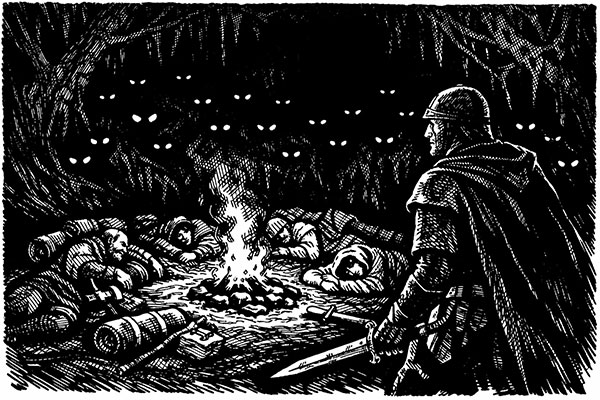
Keeping track of time is a crucial aspect of how I run my D&D games, and while I may not be 100% aligned with E. Gary Gygax’s infamous claim that, “YOU CAN NOT HAVE A MEANINGFUL CAMPAIGN IF STRICT TIME RECORDS ARE NOT KEPT” (all caps are all his), I will say that for a campaign to be meaningful for my preferred style of D&D this is absolutely the case. This means that players in my two ongoing D&D 5E groups take seriously the potential consequences of resting for an hour to get Hit Points and other resources restored. They also take very seriously the risk of a Long Rest getting interrupted depending on the environment, knowledge of the area, and general paranoia. I write all this to make it clear that these rules are meant to function with the kind of D&D games I run (and aspire to run), and understand they may not work for all groups.
The working VF5E rest and healing rules are as follows:
Bloodied (condition)
A creature whose current Hit Point total is at less than 1/2 of their maximum (rounded up) is Bloodied. While being Bloodied does not have its own effects, it can trigger others. After a Long Rest, the condition is removed from characters who are Bloodied (ie, they gain just enough Hit Points to no longer be).
Short Rest
A Short Rest is a period of Downtime at least 20 minutes long, during which a character catches their breath and does nothing more strenuous than eating, drinking, reading, tending to wounds, and other light activities. Any interruption of this brief restful period requires that the character starts over.
At the end of a Short Rest, a character regains the use of any abilities that are refreshed by a Short Rest.
Furthermore, a character who has at least 1 Hit Point and access to a medicine kit can spend a number of Hit Dice up to their Proficiency Bonus at the end of a Short Rest. For each Hit Die spent in this way, the player rolls the die and adds the character’s Constitution modifier to it. The character regains hit points equal to the total. The player can decide to spend an additional Hit Die after each roll. This expends one use of the medicine kit (no matter how many Hit Dice are spent). A character regains their spent Hit Dice upon finishing a Long Rest.
A Short Rest cannot begin within 1 hour of another Short or Long Rest ending.
Long Rest
A Long Rest is a period of extended downtime, at least 8 hours long. During which, a character must sleep for at least 6 hours and may perform light activity — reading, talking, eating, or standing watch — for no more than two hours. If the rest is interrupted by a period of strenuous activity, spellcasting, fighting, or similar adventuring activity, the character must begin the rest again to gain any benefit from it. Though in some cases, a foreshortened Long Rest can be made into a Short Rest, if voluntarily discontinued.
A character cannot benefit from more than one Long Rest in a 24-hour period, nor can it be started within 1 hour of the end of a Short Rest. A character must have at least 1 Hit Point at the start of the rest to gain its benefits.
At the end of a Long Rest, a character regains the use of any abilities that are refreshed by a Long Rest, all their Hit Dice (up to their maximum), and just enough Hit Points to no longer be Bloodied. They also recover from any lingering Death Save failures. Furthermore, they can expend Hit Dice, regaining Hit Points as if during a Short Rest with no limit to the number of dice spent this way (up to their maximum). Each die is modified by Constitution. This expends a use of a medicine kit. Hit Dice restored by the Long Rest are available to use in this way. Lastly, finishing a Long Rest reduces a creature’s exhaustion level by 1, provided that the creature has also ingested some food and drink.
For example, Rollo is a 6th-level berserker with 2 out of 6 d12 Hit Dice remaining, a Constitution of 16, and a maximum of 65 hit points. He is Bloodied, having 13 Hit Points remaining, which is below his Bloodied threshold of 32. At the end of a Long Rest, in addition to certain class abilities, he regains 4 Hit Dice. Rollo also regains enough Hit Points to no longer be Bloodied, putting him at 33. He then chooses to expend 3 of his Hit Dice–3d12+9–regaining 27 Hit Points in the process, and reaching a new total of 60 Hit Points. He or an ally must also expend a use of a medicine kit. Rollo now has 3 Hit Dice left.
Extended Rest
An Extended Rest is a week (7 days) of Downtime in which a character gets a Long Rest every night, only participates in light activity during the day, and does not participate in strenuous activity such as overland travel, combat, or manual labor.
If a character does partake in activity that would interrupt an Extended Rest, they must add an extra day to make up for that interruption. However, two or more days in a row of interruption or three or more days of interruption total in a seven-day period means the character must begin the Extended Rest over to gain its benefits.
At the end of Extended Rest, a character regains any Hit Points they have not regained during the week of Long Rests, recovers from any reduction of their Hit Point maximum caused by corruptive damage or other sources, and recovers from certain Lingering Wounds and ability score losses.
Certain other spell effects, curses, or conditions can also be removed by one or more Extended Rests.
Click here to download a PDF version of this article and the proposed rules.
—-
So, what do you think of these rules? Would you use them? Tweak them? Any pitfalls you can foresee? Let me know in the comments and I will follow up with any updates from actual play when these rules are used. Also, what should I share from my homebrew rules next? Wild magic surge tables? A particular class like rangers or rogues? The simplified encumbrance system I keep tweaking ad nauseum in order to find the proper balance between limiting what a character can carry and onerous bookkeeping? Let me know!
 HOW I RUN IT.