n.b. Revenants of Saltmarsh is a series in which I share the revisions I made to the adventures from Ghosts of Saltmarsh for my two ongoing campaigns (one of which being where this series gets its name). Needless to say, these posts will include spoilers for the classic U-series, their 5E versions printed in Ghosts of Saltmarsh, and some of the other adventures bound to that series by appearing in that anthology. If you are currently playing through (or plan to someday play through) the adventures in Ghosts of Saltmarsh, you should go find some other content on this site to read instead of this post and series. Furthermore, this series assumes you have access to the adventures being written about, so if you are a DM preparing to run these adventures, make sure to have read them first before turning to this series for suggestions on what to change.
“Isle of the Abbey” was originally published in Dungeon Magazine #34 (1992), an issue I still own, but despite having read it multiple times and considered incorporating it into past campaigns, I never actually ran it until the version that appears in Ghosts of Saltmarsh (2019).
“Isle of the Abbey” has a reputation online as a not very good adventure, but like most (if not all) published D&D adventures, it can be tweaked and adapted to fit a specific campaign and turned into something memorable. As I have said multiple times before on this blog and anywhere I discuss D&D, I simply cannot imagine running an adventure as written. I don’t even believe it is actually possible. It is like retelling a dream—in the act of telling it, you are changing it to be comprehensible to those that receive it.
While I do agree with criticisms of this adventure like those expressed by Mike Shea (of Slyflourish’s Lazy Dungeon Master fame)—that the adventure does not do enough, as written, to establish a good motivation for visiting the island and trying to clear it, nor does it tell us enough about the evil clerics who occupy the ruins of the abbey—I find these things easy to develop and good gaps where specific campaign or setting lore can be plugged in. Furthermore, what he describes as a potentially boring adventure once you get past the skeleton beach, I see as an adventure with distinctly different sections allowing for varied play: traversing the beach as a kind of gauntlet, encountering the abbey survivors for a potential social challenge, and then exploring the Winding Way for a mini dungeon crawl.
Refreshing the Hook
Ghosts of Saltmarsh sets up a fairly typical and generic hook for “Isle of the Abbey,” the mariner’s guild offers the PCs gold to clear the island of any threats in preparation for building a new lighthouse there. As I suggested when discussing my changes to “Salvage Operation,” this hook is fine if you have a group motivated by money, but in general the people I run for want something more meaningful. Instead, I had Saltmarsh leaders recruit the party to help in preparations for the imminent sahuagin assault. The lighthouse to be built on the island will be part of a new naval garrison protecting the approach to Saltmarsh. This links up “Isle of the Abbey” with “Danger at Dunwater,” as by now the town leaders would know about the sahuagin threat even if the PCs somehow failed in brokering an alliance with the lizardfolk.
When the PCs returned from completing the aforementioned “Salvage Operation,” I described Saltmarsh as being busy with wartime preparation for a large sahuagin assault. Several warships are in the harbor, and work has started on clearing some of the older dockside buildings to build a wharf and docks capable of holding more naval ships. Furthermore, a wall of sandbags is being constructed to help defend against attacks from the sea and any magical surge of water striking the town. Lastly, there is a refugee camp right outside the walls, of people who had to flee the small coastal villages that sahuagin have been systematically razing (something I also mentioned in my redo of “Salvage Operation”). All of this should help to establish the impression of an imminent threat.
Ultimately, of course, you should choose a motivation that works for your setting, characters, and campaign themes. I just think that connecting it to an ongoing effort to prepare for an assault by sahuagin makes narrative and thematic sense for Ghosts of Saltmarsh (especially since this adventure is slotted right before “The Final Enemy”—which is a problem I address in the conclusion).
Revising the Back Story: Pirates vs. Cultists
In order to maintain and reinforce how adventure events affect the world around the PCs, rather than a random beef between pirates and cultists seeming to clear the island for the mariner’s guild, I crafted a backstory that explains this conflict.
Since the abbey is maintained by a death cult, I made the island a place where people without other means can offer the bodies of loved ones to be interred and are paid a small stipend in return. On the surface, these priests seem to be completing a service to the local community, but of course they use these bodies to create the undead (and undead constructs) that defend the island and prepare for some future when their cult is ready for a more aggressive stance in bringing glory to their death god. It is also from these bodies that the Skull Dunes are seeded.
The pirates were also making use of the cult’s services, bringing not only their own dead, but victims who needed to be disappeared. Furthermore, the water around the island, with its foggy shoals, served as a good hiding spot to weigh anchor before sailing on to where they could sell off their loot.
However, as part of the preparation of defenses against the sahuagin, the navy has been taking a hard-line approach with pirates recently as they are seen as a drain on defensive resources best used to prepare for the coming invasion. A small group of pirate ships pursued by the navy decided to sail for the Isle of the Abbey, hoping for sanctuary from their clerical allies. The high priest there decided against helping them, not wanting to draw the ire of the local authorities and unwanted attention to their cultic machinations.
The rest of the adventure’s background can remain largely unchanged. When the pirates landed, they found the skeleton beach defense armed against them. The pirate leader who made it through with the surviving crew burned down the Abbey in revenge, killing most of the cultists. Having effectively cut off their nose to spite their faces, the pirates now returned to their ships, where the decimated crews were no match for the navy.
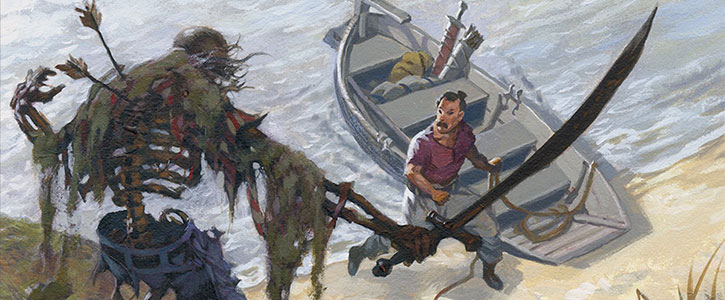
With the help of some intelligence gathered from pirate captives, the powers that be decided to clear the island and put it to use in the common defense. However, when they sent their own marines to take the island, the seeming countless skeletons on the beach were too much for their men and women unaccustomed to battling the horrors of the undead. This is where the PCs come in. Presumably, adventurers do have experience fighting undead (especially if there is a cleric or paladin among them).
Remove the Lighthouse Launch Point
I removed Major Ursa (whose name I would have changed) and the nearby lighthouse. In order for the hook to work as I describe it, there should be no easy-to-reach launch point to which to retreat. The party is dropped off by means of a launch from a naval vessel, which will return for them after the PCs set off a signal. (We chose a prestidigitational flare from the highest point on the island, but use whatever works.) This makes the adventure much more tense and finding the path of least resistance through the skeleton hordes all the more important. Major Ursa could be turned into a naval officer point of contact in order to provide the players with the information the adventure has him share—like, for example, that the Skull Dunes are the result of an enchantment or curse that needs to be broken. Of course, if the PCs have their own ship (like the Sea Ghost), they can figure out their own logistics for landing on the southern beach.
Oh, and I made getting onto the island any other way besides the beach even more difficult than the adventure suggests by putting groups of zombie sailors half-buried in the surf among the rocks at the bottom of the sea cliffs, along with lacedons prowling in the evenings.
Give it a Goal
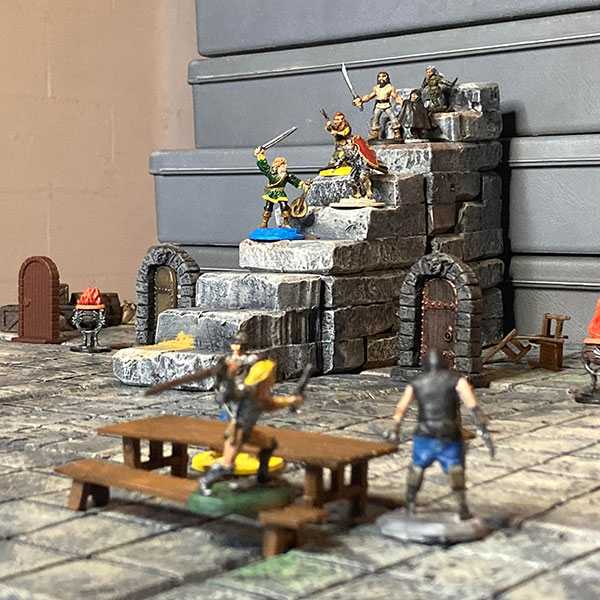
The Revenants of Saltmarsh descend into the abbey’s preserved cellar levels, as Ogmund and Alax (the cultist) become aware of them (played in Feb. 2023)
I think part of what makes “Isle of the Abbey” seem lackluster is a lack of clear and specific goals. “Clear the island” may be a goal, but is pretty broad and implies a necessarily violent approach (even if not every group would potentially interpret those instructions that way, I think many would). And while the potential negotiations with the surviving cultists and their entourage could lead to an interesting and nuanced scene, I think making the ultimate goal be finding a way to “turn off” the skeleton beach defenses in order to allow the navy to land their marines and secure the island, provides a more specific goal and a point of leverage around which such negotiations might take place. Furthermore, it makes little sense to send the PCs to clear the island if the threat of the Skull Dunes remains.
This goal also adds the complication of the party having to figure out how to neutralize the skeletons. The magical mechanism by which the hive of undead skeletons is maintained and refreshed can be found in the caverns of the Winding Way, which is accessible through the cellar in which the survivors are holed up.
NPC Motivations & Negotiations
First of all, you will need to cover for the most egregious absence in the adventure, absolutely no detail about the god these priests revere. While I made up a goddess for use in this adventure, if I ran this now, I’d use one of the 13 Gods I came up with for my Vanity Frankenstein 5E project, Orostos, God of Nature and Death. But any neutral or evil death god will do, using the details of your specific setting to paint in the necessary details of symbolism, statues, clerical vestments, and general philosophy. This would be a good place to swap in a faction the PCs have dealt with before or that is part of one of their backstories.
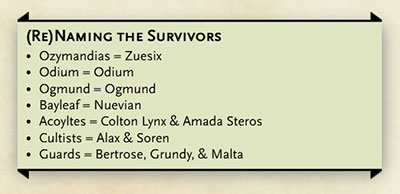
The attitudes and motivations of the survivors are among the biggest changes I made to the adventure. I made the cultists (who I named Alax and Soren) true believers. They may resent Ozymandias and despise Ogmund, but they will fight at least as long as these two leaders are fighting. They surrender if both leaders are defeated.
The two Acolytes (Colton Lynne and Amada Steros) are actually low-born nobility sent by filial duty to enter a church for future influence. They are reluctant to fight and may break to run and/or hide once they drop below half Hit Points or suffer a critical hit. They only attack if the survivors are attacked first or if directly ordered to by Ozymandias. If captured, the acolytes could suggest that their families may pay hefty ransoms for their safe return. However, no matter what else happens, they will definitely join in on attacking the party if the PCs are clearly losing, trying to look good to the others.
I see Ogmund as a retired gladiator who’s had a come-to-death-god moment and is now all in, seeing himself as an instrument of death, and generally being an arrogant asshole. No one likes him, but all fear him.
The description of Odium is perfect as written. I played him as shifty and wheedling, with untrustworthy and nervous energy.
Ozymandias (who I renamed Zeusix) is also much as described in the adventure, but I played him as a figure desperate to earn the respect of the others who have come under his command now that all their other more experienced superiors are dead. He knows that death is a likely outcome for him no matter what happens, but fears for his soul should he not hold on to this land for the church until reinforcements arrive (something that is unlikely to happen any time soon and definitely not until someone can escape the island to give a report). Aid from reinforcements would be impossible once the navy arrives. However, I also made him more susceptible to a religious argument for taking a particular action or taking a deal. I gave him the ability to cast augury as a ritual, and when I ran the adventure, the PCs actually gave him a chance to go into another room and cast it in the midst of a tense stand-off!
One of the biggest changes I made was to the character of Bayleaf—who I renamed Nuevian and made a half-elf. In my running of “Isle of the Abbey,” the swordmaster is really the preliminary reconnaissance for a criminal organization planning on stealing the abbey’s valuables. Valuables that, he learned, can be found in a treasure room accessed via the Winding Way, though he does not know where the entrance to the dungeon corridors might be. See The Bard’s Motivation below. Oh, and I gave him a magic rapier named Whipdancer.
The range of motives and dedication among these survivors should create interesting dynamics for negotiations—should the encounter not burst into immediate violence.
Encountering Survivors on the Island
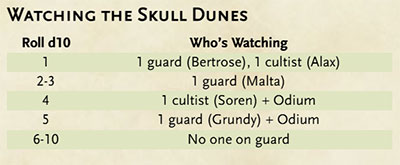
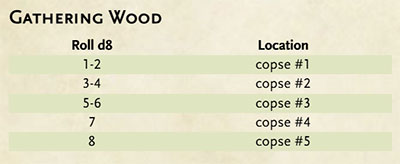
Something else that might make for interesting interactions with the survivors is if any of them are encountered separately from the rest of the group and outside of the cellar level where they are holed up. As written, the adventure describes the survivors staying in at night (as the lights necessary to traverse the island would be seen from offshore), but occasionally are about during the day completing chores or keeping a watch on the Skull Dunes. Unfortunately, however, the text gives no guidelines as to who from the group of survivors are doing these chores or watching. As such, I made a small table of possibilities, with the acolytes and guards doing most of the work. If the PCs arrive on the island during daylight hours, first roll for the 50% chance that someone is watching the Skull Dunes from just beyond them, having a good view of the beach, as it descends to the shore from where they are. I have included a table to roll on that contains both the 50% of no one watching and who is watching, if someone is there. If no one is watching, they may have joined the others doing one of the chores, or exploring another part of the island. There is always at least one guard on duty in cellar area 2.
If only one person is watching the dunes and they get the sense that the party is going to make it through the waves of skeletons they immediately run back to cellar area 2 to alert the others, alerting anyone else out on the island in the process. If two people are watching the skull dunes, one of them immediately returns to the cellars to warn the others, while the other remains behind to keep tabs on the PCs, though they flee before they can be approached.
As soon as any of the other survivors spot the PCs, they do their best to clandestinely return to the cellar levels to warn the others, with the guard(s) and/or Ogmund acting as interference if the PCs seem capable of catching up to them. That is, except for Odium, who will risk hanging back to parley with the PCs—if they do not immediately attack—as he is willing to betray Ozymandias to secure his own safe passage. Don’t forget he has a map of the cellars, but not the Winding Way.
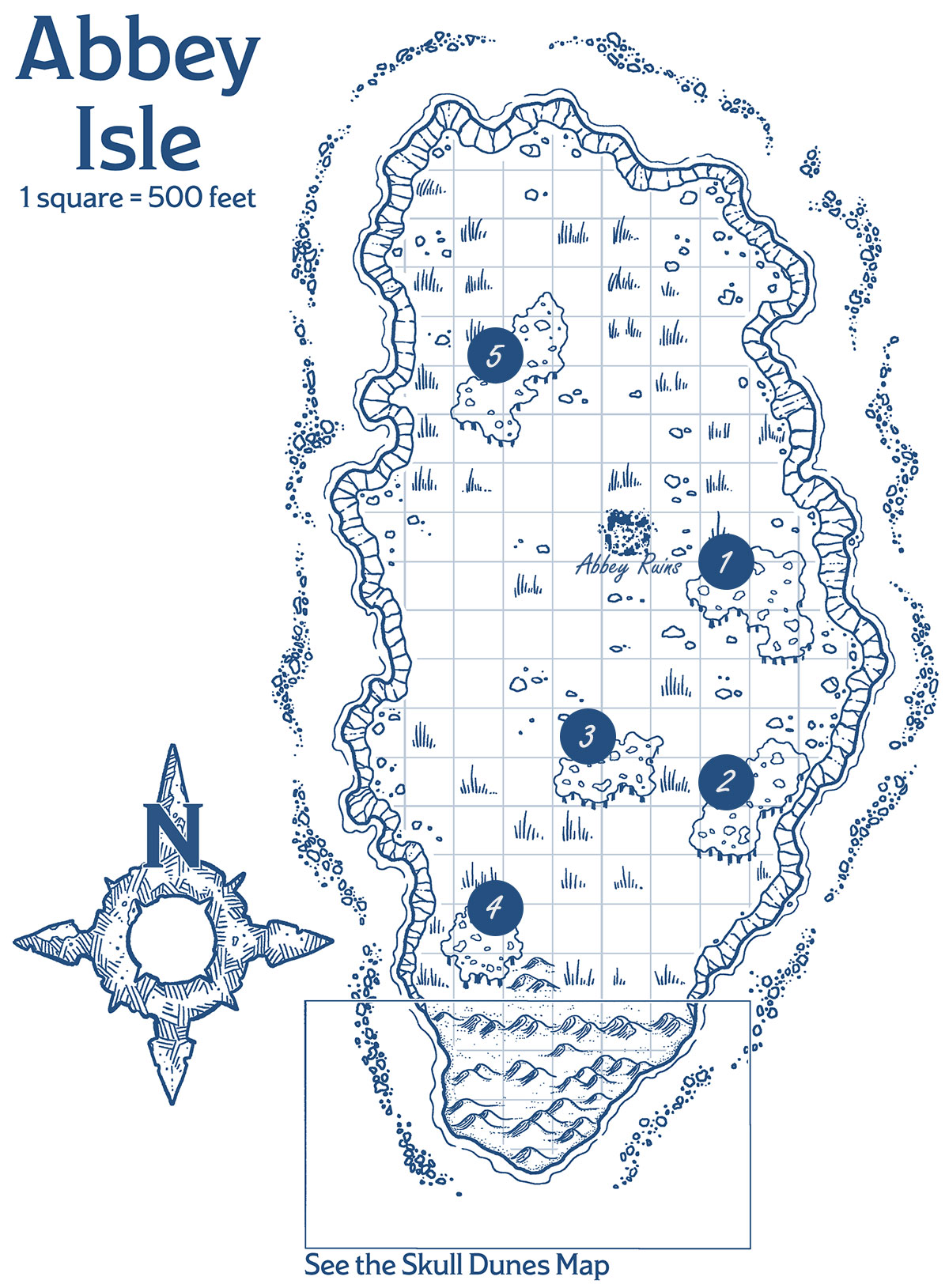
I have embedded a map of the island with the copses of trees marked on them for helping to determine where survivors might be during the day.
[click to enlarge]Nearby Copse. This copse of trees has been nearly depleted of fallen wood to collect, with a few unhealthy storm beaten trees amid fallen rotten trunks and fresh stumps. There is a cliff about halfway down the cliffside on the eastern side of the island near this copse. It is the common fishing spot for survivors and not far from where they drop buckets to collect seawater for purifying. This spot is nearly impossible to spot (DC 30) from below.
Zombie Copse. A trio of zombie pirates dwell in these woods, each of them has taken a severe wound to the legs or feet, making them move at half speed. They wander around at night, but during the day, they are half buried in the sandy ground beneath the trees. This place has also been mostly depleted of fallen wood.
Dead Copse. The rotten corpses of about 9 pirates are found here, some partially devoured by carrion birds and animals. This area holds the thickest stand of trees and is least depleted of wood.
Lookout Copse. While lookouts are supposed to watch the Skull Dunes from the dunes to the southeast of these trees, more often than not, the guard or cultist on duty, wanders over to the shade of these trees when the sun becomes too hot. There are some dead pirates here, but there is still a lot of wood to collect for firewood.
Distant Copse. Most of these trees have been thinned out by a blight and picked clean of wood to use for fuel.
Finding the Winding Way
As written, the adventure makes the mistake of making the Winding Way too much of a secret. If you want the PCs to find and explore a place without getting frustrated or bored, provide reasonable ways to introduce the information required to at least look for it.
Ozymandias should definitely know about the Winding Way, but since despite being the highest-ranking surviving cleric, he was still of a relatively low rank, he has never been there before and fears its traps. He does, however, bear a gold medallion (see adventure) that holds back the undead from attacking him while in there, and while he wants to keep the Winding Way a secret, I can imagine a scenario in which he offers to lead the party, counting on the undead destroying the PCs while he escapes.
The acolytes should know of the Winding Way from stories shared among other low-ranked church members, but their information about it is full of exaggeration. They don’t know where the entrance is.
As established earlier (and explained below), the bard should know of the existence of the Winding Way and suspects the entrance is nearby.
The Bard’s Motivation
Trapped on the island with his marks, Bayleaf is torn between a chance to try to access the treasure he hoped to steal and just wanting to leave the island with his life. If he learns from the PCs that the navy plans to build a garrison here, he will almost certainly do his best to gain the party’s good graces and retrieve the treasure from the Winding Way. He figures sharing it with the party is better than losing all of it once the navy arrives. He may even blow his cover, if it means surviving. But mostly, he tries to be affable and claims to be a sword instructor for hire with no particular affinity to this cult and their god.
Rather than the particularly ridiculous suggestion that he will help the party for 500 gps but won’t draw a map or help them fight (in 40+ years of running D&D, I have never known players that would agree to that deal), I had him waiting for his moment to turn on these creeps. Bayleaf may stall and make excuses to stay out of a fight if it breaks out, waiting to see who is more likely to win and then striking a surprise blow against his fellow survivors. If the party asks about the Winding Way or secret places, he may offer the little he knows about it (traps, undead, where the constructs are made), and— if he thinks it is to his advantage—try to convince the party that the controls for the Skull Dunes might be in the same place as the treasure he seeks. He happens to be right but doesn’t know this for certain.
Bayleaf has been fostering a camaraderie with the guards he has been training as part of a contingency plan should the future heist go wrong. (You can decide how genuine Bayleaf’s feelings are). As such, he may be able to convince up to two of the guards to stay out of a fight, or even turn against Ozymandias and Ogmund (both of whom they resent) in return for a promise that they will avoid arrest. Bayleaf may offer this chance as a bargaining chip with PCs trying to avoid violence.
If this scenario comes up, have one of the PCs make the argument and roll a persuasion (or deception, if they’re lying) against DC 20. Bayleaf may be trying to convince them, but ultimately it is the PCs offer that matters. Of the three guards, Bertrose is loyal and cannot be convinced under any circumstances short of being ordered by Ogmund or Ozymandias. Amelda will feel betrayed by Bayleaf, so trying to persuade her is made at Disadvantage, while Grundy is a veteran who has followed many different leaders over the years. Roll a Persuasion check against DC 10 for Bayleaf. If he succeeds, the PC skill check is made at Advantage, representing his influence on the guards.
Lastly, Bayleaf saw Ozymandias take the gold medallion off the body of a higher ranked priest and has suspicions about its purpose (GoS 102). He may share this info with the PCs, not revealing that he had already stolen an identical medallion for his planned future caper. He wears it tucked into his armor.
I made some tweaks to the bard stat block included in Appendix C of Ghosts of Saltmarsh, because Bayleaf is supposed to be a martial instructor for the guards but has no notable ability with the sword. As such, I gave him an ability to use bard inspiration dice in combat (a variation of the College of Swords bard subclass from Xanathar’s Guide to Everything).
The Gold Medallion
Ozymandias and Bayleaf both have gold medallions described in the adventure (GoS 102). However, I made the medallion’s protection only work for those wearing/brandishing one, not their companions (as the adventure suggests). Presumably, there were several other medallions in the abbey that were destroyed. It becomes too easy to circumvent the undead if the medallion has no limit to its protection. Instead, the players will have to think tactically about putting such a medallion to use if they get their hands on one.
The Winding Way
When rethinking the Winding Way portion of the adventure, I gave these dungeon levels an actual purpose. These trapped tunnels guard both the magical island relic that controls the skeletons of the Skull Dunes and a workshop where the now slain High Priest (High Abbot? Just Abbot?) and his attendants built undead constructs, one of which is still functioning down there, serving as the final obstacle to addressing the beach magic powering the skeletons.
Guardian Monsters
While the two biggest changes I made to the Winding Way are areas12. Hallway Guard Room and 14. Treasure Room, I changed most of the guardian monsters as well.
None of the changes to guardian monsters are required to add the “seeking to turn off the skeleton beach” aspect of the adventure I am suggesting, but between my penchant to run monsters as if they actually want to win (and not just pose a challenge that the players assume they can beat) and toning down the power of the gold medallions, I tweaked the combat challenge level downward.
In Area11. Entrance Guard Room, I removed the minotaur skeletons, specters, and the bodak. Minotaurs are not a common species in my setting and for some reason the bodak has appealed to me. Furthermore, the two specters were going to be way too challenging for my group and not the kind of undead I imagine being easily controlled for use in guard duty. My thinking was also influenced by the fact that I would feel forced to redesign specters to have the immunities and resistances I think an incorporeal creature should have. I think creatures with no physical substance should just be really hard to damage with conventional weapons, even if they are magical.
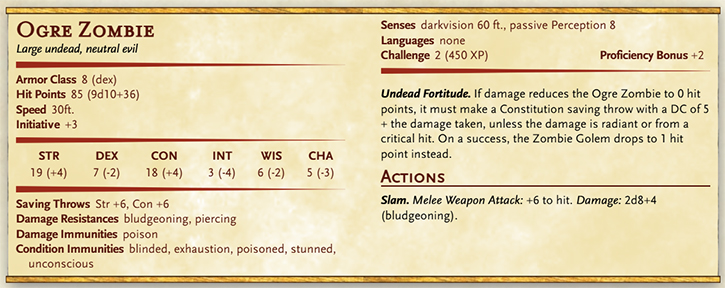
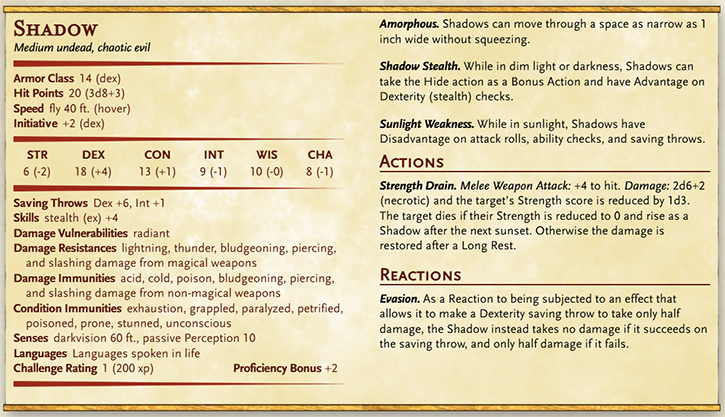
Instead, I placed two ogre zombies to guard this room, while a pair of shadows roam the corridors of the Winding Way and arrive as soon as there is sound of intruders or battle in area 11. The ogre zombies are more in line with the image of cultists creating undead from delivered corpses. You can check out my re-designed shadow in the included stat blocks.
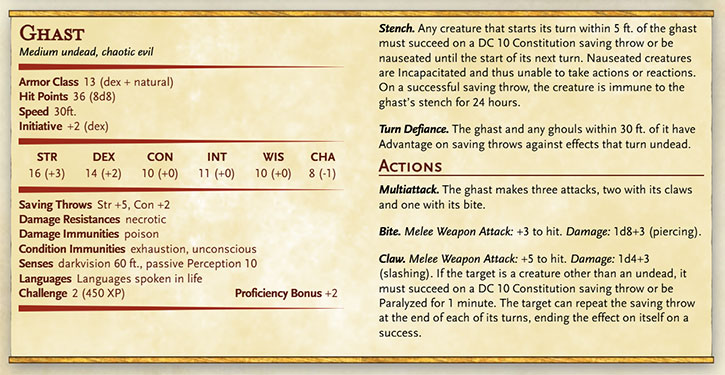
Area 12. Work Room. Changed from a Hallway Guardroom. It is still guarded, however. I removed the crystal minotaur statue but kept the ogre zombie and two ghasts. The former acted as a guard, the latter two as assistants who served in return for scraps of human carrion to eat. They wear smocks of tanned human hide. I am also re-sharing a stat block for my version of Ghast with a different (and more powerful) stench power in order to differentiate them from troglodytes.
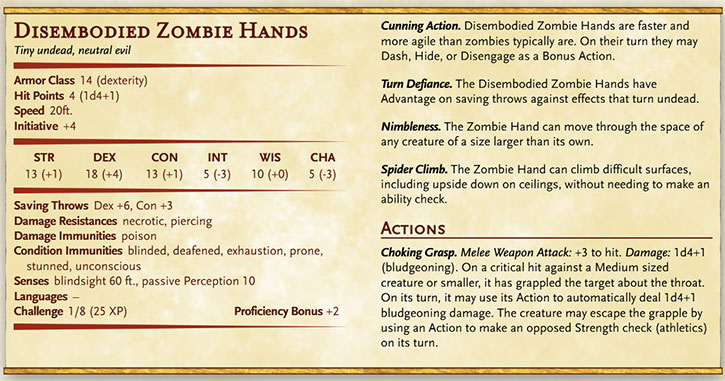
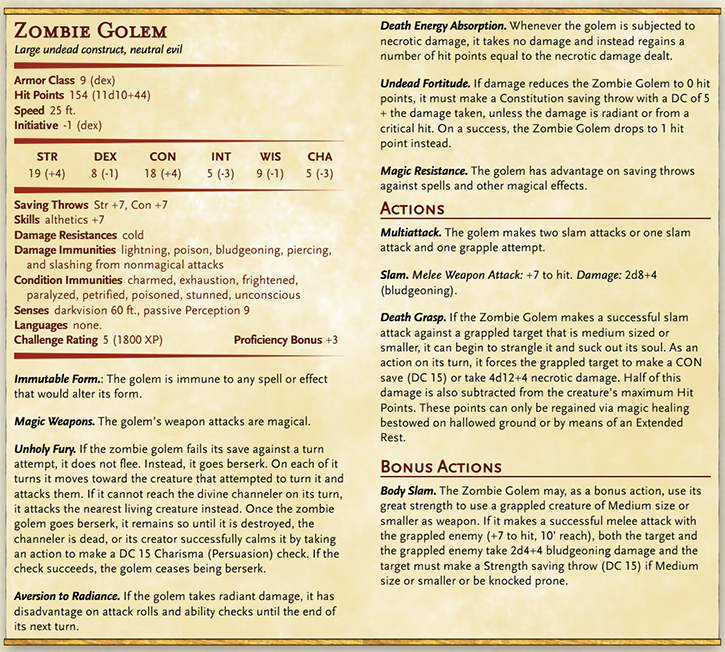
Furthermore, there is a stone slab that holds the inert form of an incomplete zombie golem. There is a Manual of Golems hidden in a secret compartment in the slab. It includes instructions for creating both flesh golems and zombie golems. There is a table with various surgical and autopsy tools and a dozen crates and coffers along the walls. Several humanoid torsos, and dismembered arms, legs, and heads hang from the ceiling by hooked chains. Something inside two of the coffers begins to scratch and move within them as soon as there is the sound of battle in the room. When opened, a dozen disembodied zombie hands (basically crawling claws, see stat block) emerge from the boxes that hold other inanimate body parts. [You can have them burst out to attack if the battle goes more than 5 rounds].
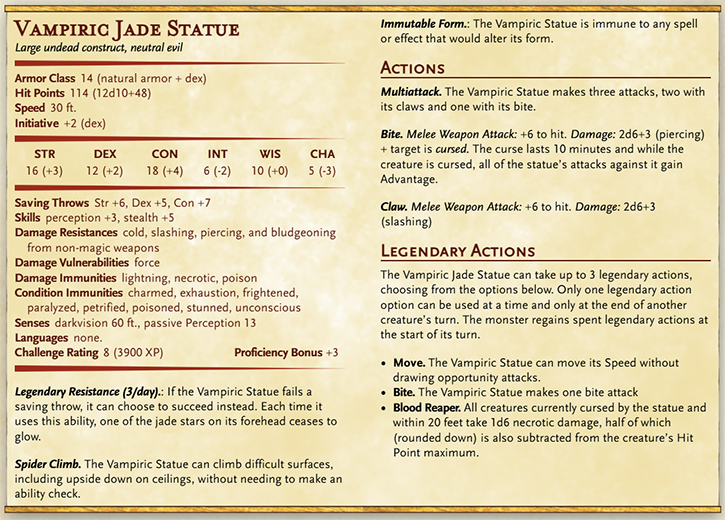
Area 13. False Treasure Room. I did keep the living jade statue, describing it as a kind of vampiric mummy with a jade shell. I basically used the stats as written in the book, but made the necrotic damage from Blood Reaper do 1d6, instead of a flat 5, and gave it spider climbing—the vision of this freaky monster walking on all fours on the walls just seemed thrilling to me and had the benefit of potentially making the fight tactically interesting. When I ran the adventure, it grappled the halfling PC and then took off across the ceiling to bite him some more. I also had its legendary resistance visualized by three ornate and glowing pieces of jade on its forehead like a crown. Each time a legendary resistance was used, the light within one of the pieces faded.
Area 14. Map and Treasure Room. I removed the living iron statues. Instead, the treasure room is guarded by a Zombie Golem—imagine a flesh golem made from necrotic flesh. Unlike the other undead, who leave alone anyone wearing the medallion, the medallion must be presented to the golem for it to refrain from attacking someone. If it goes berserk, the medallion is no protection.
Neutralizing the Skull Dunes
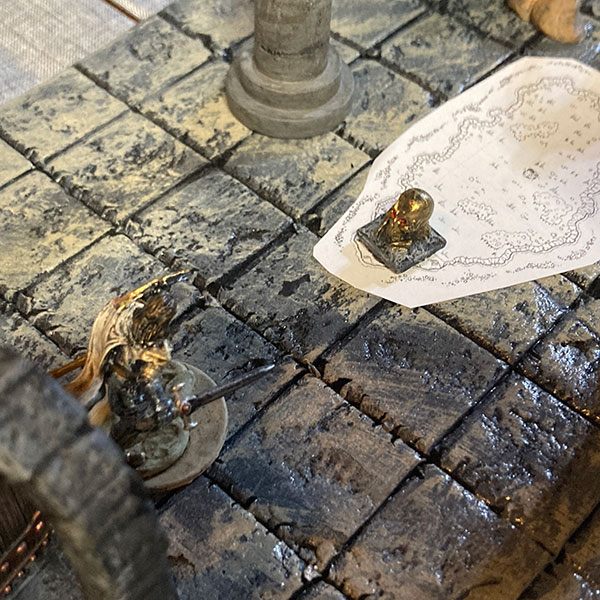
In addition to the treasure, the floor of Area 14. is inlaid with a map of the island at a smaller scale (about 15 feet from north to south) on the far side of columns from the entrance. On the area that corresponds with the beach is a golden skull with ruby eyes carved with arcane runes. The zombie golem stands to one side of it, only attacking if someone moves to touch the skull, steps on the map, or attacks the golem. The skull is too heavy for mage hand to lift. The skull is a necromantic undead relic that births the endless horde of skeletons and sets them to guard an area prepared for this purpose. This might suggest that the skeletons might actually be moved to different parts of the island, but the area to be guarded needs to be seeded with corpses through a complex ritual. That said, a party of heroes might have some reservations about leaving this evil magical item for the navy or local government to get their hands on. The details of how the magic works are not that important unless you have the kind of group that might look for a way to exploit it, in which case, I am sure you can come up with something that works for your style of game.
Yaakov the Paladin approaches the map and cursed skull.
In order to turn off the Skull Dune skeleton defense, the golden skull has to be removed from the map and one of two things need be done.
A cleric or paladin can use their Channel Divinity, projecting divine power into the relic and breaking any existing attunement and nullifying its powers until someone reattunes, shutting down the Skull Dunes in the process
Anyone may spend a Short Rest attuning to it. This would allow them to turn the beach skeleton defense on and off using the map.
This can be discovered by means of an Intelligence (arcana) or Intelligence (religion) check against DC 20, or by using an Identify spell on the skull.
However, gatekeeping this crucial information behind a single roll is a recipe for frustration and disaster. This method worked in my games because my players know that the energy of channel divinity may be called for in order to open a magically locked door, temporarily purify an object or place, or accomplish something similar. As such, the idea of using the class power in that way was among the first things the players thought of. In your game, however, you may want to seed this info somewhere else in the adventure. Perhaps, there is a book among abandoned loot discovered in one of the copse of trees or buried in the smoldering abbey ruins; Ozymandias would certainly know (even about the curse—see below) while, Odium being an expert on religious relics might suggest the possibility, if consulted, and so on.
At the very least, you should make it clear to your players, once they discover the skull is magical, that attunement is required in order to make use of it.
Curse of the Magic Skull
Unfortunately, what none of these methods will reveal is that anyone who attunes to the skull will also be cursed. Every 24 hours that the skull is away from the island, the attuned user must make a Constitution saving throw against DC 10 or take 1d6 necrotic damage (even if the skull is not in their possession). This damage is also removed from their Hit Point maximum and cannot be regained until the curse is broken by returning the skull to the island, establishing a new place for the skeleton defense to manifest, destroying the skull, or using a spell like remove curse. The save DC increases by 5 for each 24 hours the skull is away from the island.
No one else may attune to the skull until the previous attuned user is dead or the curse is broken. If you die from this damage, you rise again as some kind of free-willed skeletal undead (DM’s choice) after the next sunset.
Conclusion
There are countless other little changes I made to this adventure to make it work better both with my own needs and with the Ghosts of Saltmarsh collection of adventures, but these are the ones that I think make the most sense and provide opportunities for other DMs to adapt for themselves. It breaks down the adventure into three distinct sections: navigating skeleton beach, interacting with the surviving cultists and their retinue, and exploring the dungeon level to find out how to turn off the beach and allow the navy to land. There is also a potential political element that you can play up regarding what is going to happen to the necromantic relic. Perhaps some local leader wants to find a way to use it against the sahuagin.
As I suggested earlier, it may also benefit you to make the cultists (and/or the pirates) be part of/allied with a faction the party has heard of, dealt with before, or that you want to introduce as a recurring force in the campaign.
Any prisoners the PCs might take can easily be handed off to the navy once the skeleton curse is dealt with. When I ran this for my own group, they ended up recruiting the visiting bard swordmaster and vouched for him, giving him freedom in exchange for his help. They may have even given him a cut of the loot, if I remember correctly, and the players never knew his ulterior motive. I meant to reintroduce the bard and his gang later when a PC rogue encountered a local thieves guild in another town during a different adventure, but things got sidetracked, and I ended up cutting that element.
The Isle of the Abbey can also be a site for later encounters. For example, in my Revenants of Saltmarsh campaign, there was a major sahuagin attack on the efforts to build defenses and harbor ships there. There was a chance the party would be there when this happened, but they chose to go somewhere else, so it happened in their absence. However, this news still served the purpose of building up tension for a big invasion and raises the stakes for successfully accomplishing the mission laid out in The Final Enemy.
Finally, it may be worth considering that even after completing “Isle of the Abbey,” the PCs may not be high enough level to deal with “The Final Enemy.” In my original Ghosts of Saltmarsh+ campaign, the PCs decided to turn down the “Isle of the Abbey” adventure altogether, following up on a connection they made in their very first adventure (before “The Sinister Secret of Saltmarsh”) leading to N1 – Against the Cult of the Reptile God (which I revised for the first three issues of the HOW I RUN IT zine) and then later being embroiled in a situation via one PC’s druidic responsibilities (see “The Wayward Wood” from Dungeon #32). But in my eponymous Revenants of Saltmarsh game, after another unrelated adventure, the party pursued opportunities to find the sahuagin lair and seek out lore about the sahuagin that might help defeat them, from a hidden elven enclave where there are folks who were alive the last time the sahuagin attacked, five centuries ago.
I bring this up to suggest that you can sew together the “bullet points” of each individual adventure with the overarching narrative of preparing for the ultimate showdown while incorporating other adventures. As I will discuss when we get to “The Final Enemy” (which I have not run a second time with 5E rules yet), if the PCs take too long in performing the planned preemptive assault on the discovered sahuagin lair, that overrunning invasion of Saltmarsh may actually arrive first!
The remaining customized stat blocks have been reproduced below, or you can download a PDF of this entire article, including the stat blocks by clicking here.
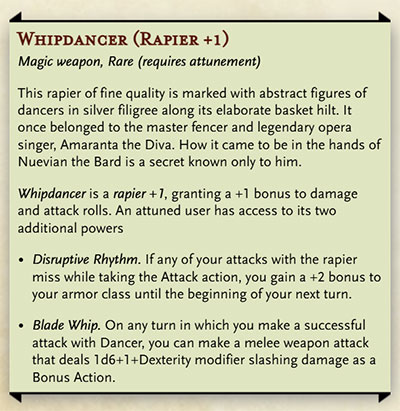 One of the biggest changes I made was to the character of Bayleaf—who I renamed Nuevian and made a half-elf. In my running of “Isle of the Abbey,” the swordmaster is really the preliminary reconnaissance for a criminal organization planning on stealing the abbey’s valuables. Valuables that, he learned, can be found in a treasure room accessed via the Winding Way, though he does not know where the entrance to the dungeon corridors might be. See The Bard’s Motivation below. Oh, and I gave him a magic rapier named Whipdancer.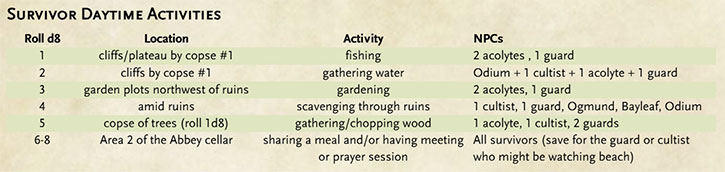
 If only one person is watching the dunes and they get the sense that the party is going to make it through the waves of skeletons they immediately run back to cellar area 2 to alert the others, alerting anyone else out on the island in the process. If two people are watching the skull dunes, one of them immediately returns to the cellars to warn the others, while the other remains behind to keep tabs on the PCs, though they flee before they can be approached.
 As soon as any of the other survivors spot the PCs, they do their best to clandestinely return to the cellar levels to warn the others, with the guard(s) and/or Ogmund acting as interference if the PCs seem capable of catching up to them. That is, except for Odium, who will risk hanging back to parley with the PCs—if they do not immediately attack—as he is willing to betray Ozymandias to secure his own safe passage. Don’t forget he has a map of the cellars, but not the Winding Way.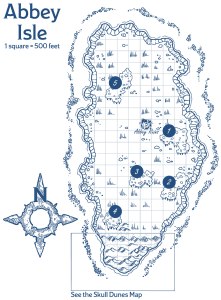
 As written, the adventure makes the mistake of making the Winding Way too much of a secret. If you want the PCs to find and explore a place without getting frustrated or bored, provide reasonable ways to introduce the information required to at least look for it.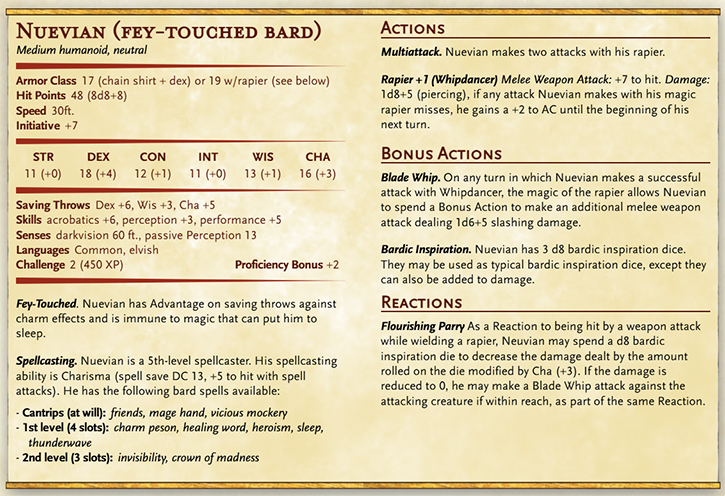


Leave a Reply